Food Service Distribution Companies vs GPO Purchasing Programs
Food Service Distribution Companies vs GPO Purchasing Programs

Most restaurant chains, hotel operators, healthcare facilities, schools, and other foodservice businesses rely on foodservice distributors to supply the products, ingredients, and operational supplies required for daily operations. Distributors play a critical role in the supply chain by managing inventory, logistics, warehousing, and product delivery.
At the same time, many organizations use a foodservice group purchasing organization (GPO) to increase purchasing efficiency, gain access to negotiated contracts, and strengthen supplier relationships. While distributors focus on sourcing and delivering products, GPOs help businesses optimize procurement strategies and reduce purchasing costs.
Contrary to a common misconception, foodservice distributors and GPO purchasing programs are not competing solutions. In fact, they often work together to support a more effective and cost-efficient procurement process. Understanding the role of each can help organizations build a stronger and more resilient foodservice supply chain.
What Are Food Service Distribution Companies?
The foodservice distribution industry is an essential part of the supply chain, connecting manufacturers and suppliers with restaurants, hotels, healthcare facilities, schools, and other foodservice operations. Many food distributors that Canadian businesses rely on perform this role across regional and national markets.
The primary function of a foodservice distributor is to source, warehouse, and distribute a wide range of products, including food, beverages, packaging materials, cleaning products, and sanitation supplies.
Distributors support business operations by streamlining purchasing, consolidating orders, and ensuring timely product delivery. Their inventory management and logistics capabilities allow operators to focus on serving customers rather than managing supply chain complexities.
How Food Service Distributors Support Daily Operations
Foodservice distributors help businesses maintain efficient day-to-day operations by managing inventory flow and ensuring product availability. They provide access to products from multiple manufacturers through a single purchasing channel, simplifying the procurement process.
Key distributor services include:
- Warehousing and inventory management
- Product sourcing and procurement
- Transportation and logistics
- Product delivery
- Access to food, beverage, and supply categories
- Product availability and replenishment
Common Challenges When Working with Distributors
While distributors play a vital role in operational success, some businesses may face challenges when trying to maximize purchasing performance solely through distribution relationships.
Usual challenges may include:
- Limited negotiating power for individual operators
- Different contract terms across multiple suppliers
- Restricted access to national purchasing agreements
- Limited opportunities to benefit from group purchasing programs
- Reduced access to broader cost-saving initiatives
What Is a Group Purchasing Organization (GPO)?
For businesses wondering what a group purchasing organization is, the answer is straightforward: a GPO helps organizations improve procurement performance by leveraging the collective purchasing power of its members.
Rather than negotiating independently with suppliers, participating organizations gain access to agreements negotiated on behalf of the entire membership base.
In the foodservice industry, a foodservice GPO works with manufacturers, suppliers, and service providers across multiple categories to support restaurants, hotels, healthcare facilities, senior living communities, and other operators. Unlike foodservice distributors, which focus on product sourcing and delivery, GPOs specialize in procurement strategy and supplier contracting.
It's important to note that a GPO is not a replacement for a distributor. In most cases, organizations use GPO programs alongside their existing distributors to enhance purchasing performance while maintaining established supplier relationships.
How GPO Purchasing Programs Work
GPO purchasing programs leverage the combined buying power of multiple businesses to negotiate favorable contract terms with suppliers.
This collective purchasing approach often allows participating organizations to secure benefits that would be difficult to achieve independently.
Common features of GPO programs include:
- Negotiated supplier contracts and cost savings
- Access to national and regional purchasing programs
- Supplier relationship management
Why Foodservice Businesses Join GPO Programs
Many foodservice operators participate in GPO programs to strengthen their purchasing strategies while maintaining operational flexibility. Beyond reducing the need for individual supplier negotiations, GPOs offer several advantages.
Common reasons businesses join GPO programs include:
- Access to negotiated contract savings
- Expanded supplier networks
- Procurement and purchasing support
- Opportunities to reduce operating costs
- Scalable purchasing solutions for growing businesses
Food Service Distribution Companies vs GPO Purchasing Programs
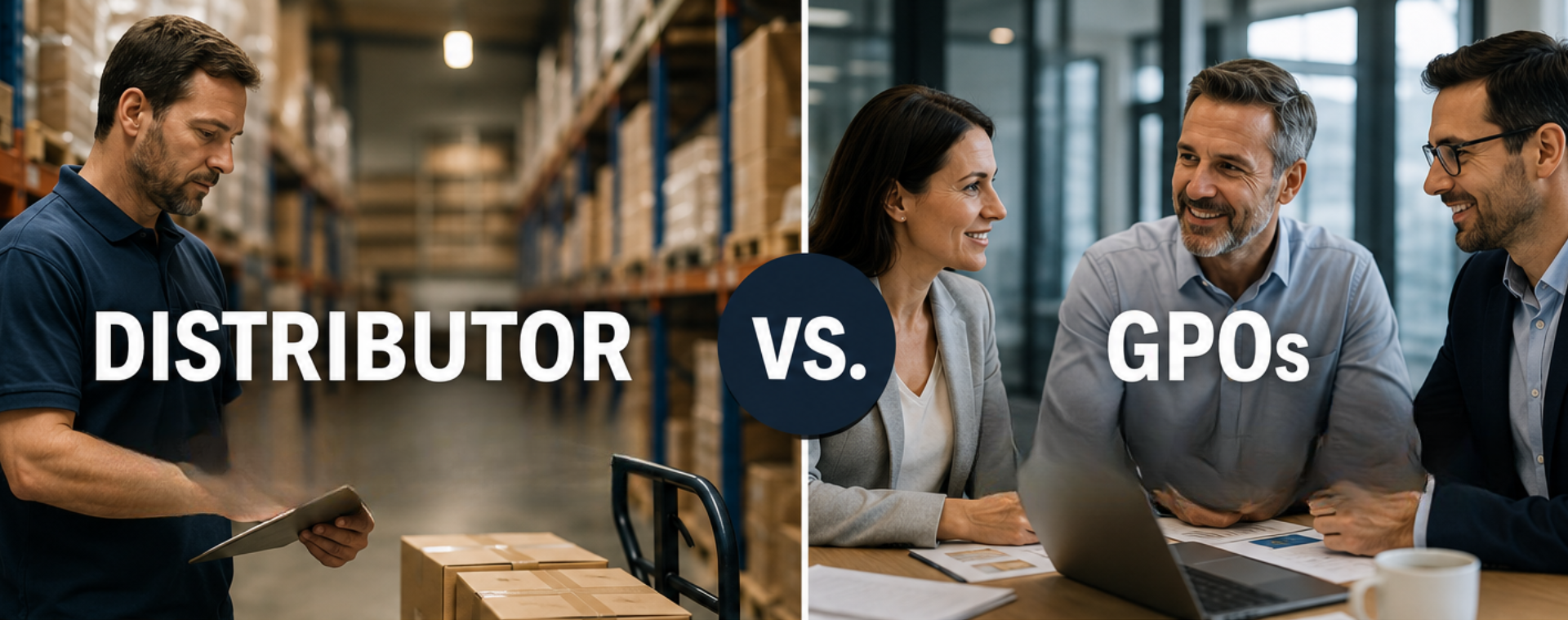
Although foodservice distributors and group purchasing organizations both support the supply chain, their primary functions are different.
Distributors focus on sourcing, warehousing, and delivering products, while GPOs help organizations optimize procurement through supplier agreements, purchasing programs, and strategic cost-saving initiatives.
In practice, many businesses benefit from using both models together.
| Category | Food Service Distribution Companies | GPO Purchasing Programs |
|---|---|---|
| Primary Role | Delivering products and supplies to businesses | Improve procurement performance through purchasing programs |
| Supplier Relationships | Manage sourcing and distribution activities | Negotiate agreements with suppliers and manufacturers |
| Pricing Influence | Based on distributor pricing structures | Access to negotiated contract savings |
| Contract Access | Distributor-specific agreements | National and regional purchasing programs |
| Purchasing Support | Focused on fulfillment and logistics | Focused on procurement strategy and supplier management |
| Cost-Saving Opportunities | Operational and delivery efficiencies | Purchasing optimization and contract savings |
Both models contribute significant value. Distributors ensure businesses have reliable access to products, while GPOs help maximize purchasing value. When used together, they create a stronger and more effective procurement strategy.
Why Many Businesses Use Both Models Together
For most restaurants, hotels, healthcare organizations, and foodservice operators, the decision is not whether to choose a distributor or a GPO, it is how to use both effectively.
Because their roles are complementary, distributors and GPOs often work together to support operational success and purchasing optimization.
Different Roles Within the Procurement Process
Foodservice distributors focus on product availability, inventory management, and delivery. GPOs focus on supplier contracts, purchasing programs, and cost reduction strategies.
Together, they help businesses:
- Ensure product availability and effective inventory management
- Simplify procurement across multiple product categories
- Access negotiated supplier agreements
- Identify cost-saving opportunities
- Improve overall procurement performance
This combination allows businesses to develop a more strategic and efficient purchasing approach.
A Practical Example of Using Both Models
A restaurant group or hotel chain may continue purchasing products through its preferred distributor while simultaneously participating in a GPO purchasing program.
In this scenario:
- The distributor manages product sourcing and delivery.
- The distributor supports daily operational requirements.
- The GPO provides access to negotiated contract savings.
- The GPO helps optimize supplier agreements.
- The GPO identifies additional purchasing opportunities and cost reductions.
Rather than competing with one another, distributors and GPOs often provide greater value when used together.
How GPO Programs Can Strengthen Existing Distributor Relationships
Some businesses assume that joining a GPO means changing distributors or replacing current suppliers. A GPO is typically designed to complement existing supplier relationships, not replace them.
By improving contract utilization and increasing purchasing power, GPOs help businesses extract more value from the relationships they already have.
Improving Contract Performance
One of the key benefits of a GPO is access to negotiated purchasing programs that support smarter procurement decisions.
By leveraging collective purchasing power, GPOs help businesses standardize purchasing practices, improve contract compliance, and achieve greater consistency across suppliers.
Potential benefits include:
- Access to negotiated contracts
- Improved supplier contract terms
- More standardized purchasing processes
- National and regional purchasing program opportunities
- Better visibility into purchasing performance
Businesses can continue working with their preferred distributors while implementing a more structured and strategic procurement process.
Expanding Supplier Opportunities
In addition to enhancing existing agreements, GPOs can introduce businesses to a broader network of supplier options.
This creates opportunities to explore new product categories, service providers, and cost-saving programs that may not exist within the current supplier base.
Examples include:
- Access to a larger network of approved suppliers
- Savings opportunities beyond food products
- Access to office supplies and operational resources
- Specialty sourcing solutions
- Greater flexibility in purchasing decisions
As a result, organizations can strengthen procurement performance without disrupting established distributor relationships.
Key Benefits of GPO Purchasing Programs
The benefits of GPO purchasing programs extend well beyond supplier negotiations.
By combining the purchasing volume of multiple organizations, GPOs help businesses improve procurement efficiency while maintaining flexibility in their operations and vendor relationships.
Key benefits include:
- Contract Savings – Gain access to negotiated supplier contracts and savings programs.
- Expanded Supplier Networks – Connect with a broad range of vetted suppliers across multiple categories.
- Procurement Support – Receive guidance on purchasing, sourcing, and supplier management.
- Administrative Efficiency – Reduce the time spent negotiating contracts and managing vendor relationships.
- Spend Visibility – Gain insights into purchasing activity and identify opportunities for improvement.
- Scalability – Access purchasing solutions suitable for independent operators, franchises, and multi-unit organizations.
For restaurants, hotels, healthcare facilities, and other foodservice operators, GPO programs can play a key role in managing costs and supporting long-term procurement strategies.
How Entegra Helps Businesses Improve Procurement Performance
As a foodservice group purchasing organization, Entegra helps businesses strengthen their procurement processes while maintaining relationships with preferred suppliers and distributors.
Rather than changing how organizations operate, Entegra helps improve purchasing performance by providing access to purchasing programs, supplier networks, industry expertise, and contract opportunities.
Restaurants, hotels, senior living communities, healthcare organizations, and other foodservice operators rely on Entegra to uncover opportunities that increase purchasing efficiency and support long-term savings.
Entegra helps organizations:
- Access contract savings and purchasing programs
- Improve procurement visibility and spend management
- Reduce costs across multiple operational categories
- Connect with a broad network of suppliers and service providers
- Strengthen supplier relationships and contract compliance
- Improve purchasing efficiency without disrupting existing operations
Because every organization has unique purchasing requirements, balancing operational efficiency with cost savings is a critical component of any successful procurement strategy.
FAQ
How do GPOs help businesses manage supplier relationships?
GPOs help businesses strengthen supplier relationships by providing access to negotiated contracts, supplier programs, performance tracking, and procurement support across multiple categories.
Do GPO purchasing programs only benefit large organizations?
No. Many GPO programs are designed to support small businesses, independent restaurants, hotels, franchises, and growing multi-unit operations.
Can GPO programs support purchasing beyond food products?
Yes. GPOs often provide purchasing programs for equipment, supplies, technology, maintenance services, office products, and other business-related categories. Entegra also offers supplier programs that extend beyond food purchasing.
Can businesses keep their preferred suppliers when joining a GPO?
In many cases, yes. Businesses can often continue working with their existing suppliers and distributors while gaining access to additional purchasing programs and negotiated agreements through a GPO.
How can a GPO improve procurement visibility?
GPO purchasing programs can provide better insight into spending patterns, purchasing activity, and supplier performance, helping organizations identify opportunities for savings and process improvements.
What should businesses evaluate when choosing a GPO?
Businesses should consider factors such as supplier network strength, available purchasing programs, industry expertise, customer support, reporting capabilities, and overall procurement value when evaluating GPO providers like Entegra.